
SOUP
Roasted Tomato Soup
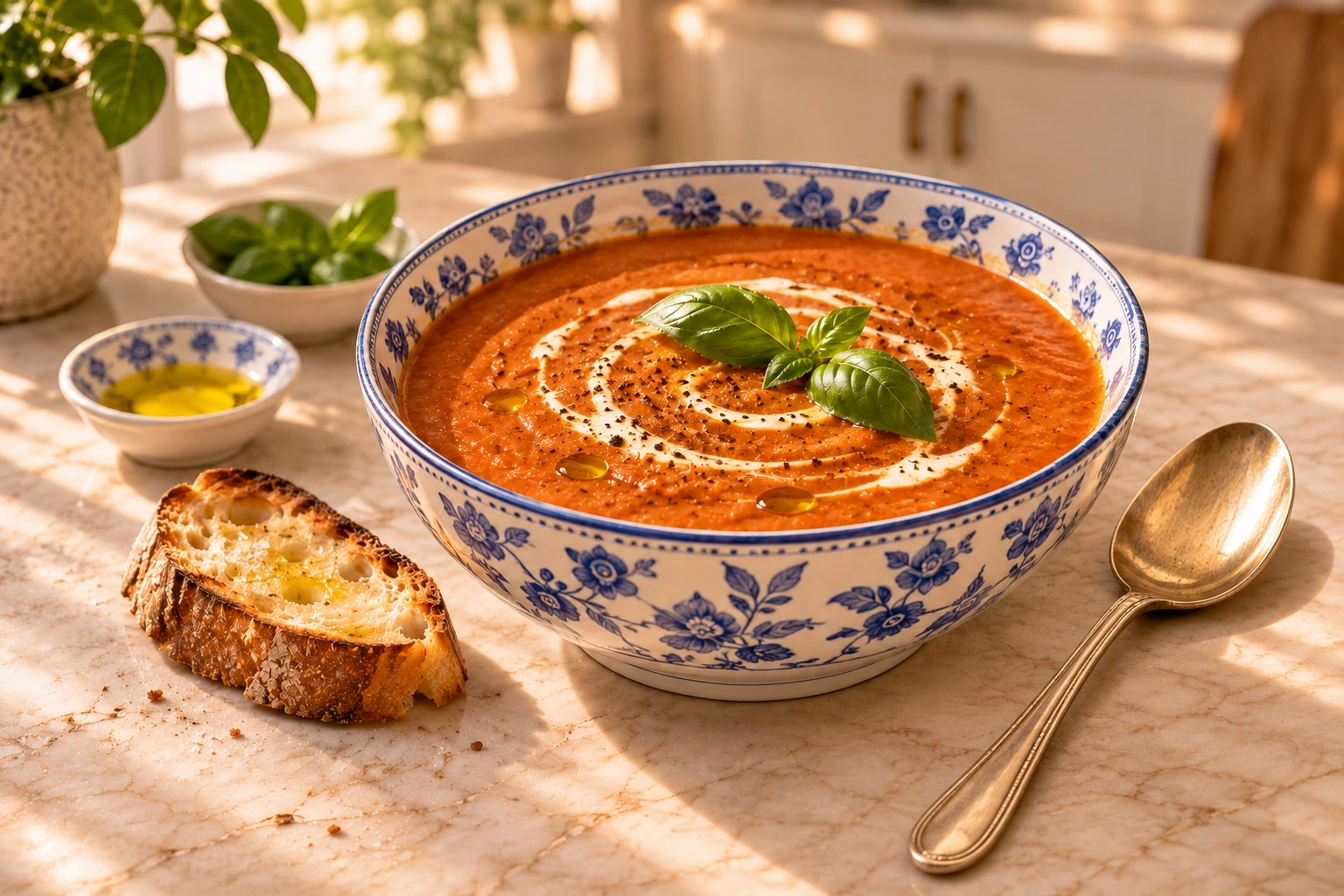
Roasting tomatoes with red pepper, onion and a whole head of garlic gives this soup a mellow sweetness and a deeper flavor than a quick stovetop simmer. Blend the vegetables with their roasting juices, then add vegetable broth, cream and fresh basil. The recipe makes four servings. Use ripe tomatoes and give them room on the tray so their cut edges brown while the centers soften. Keep all the listed olive oil and cream within the measured amounts; bread and extra drizzles are optional accompaniments.
Gather what you need
Ingredients
NUTRITION
Nutrition per serving
- Calories
- 244 kcal
- Protein
- 4.0 g
- Fat
- 18.0 g
- Carbs
- 19.0 g
Estimated values per serving.
Ingredient Visual Board
View Ingredients Image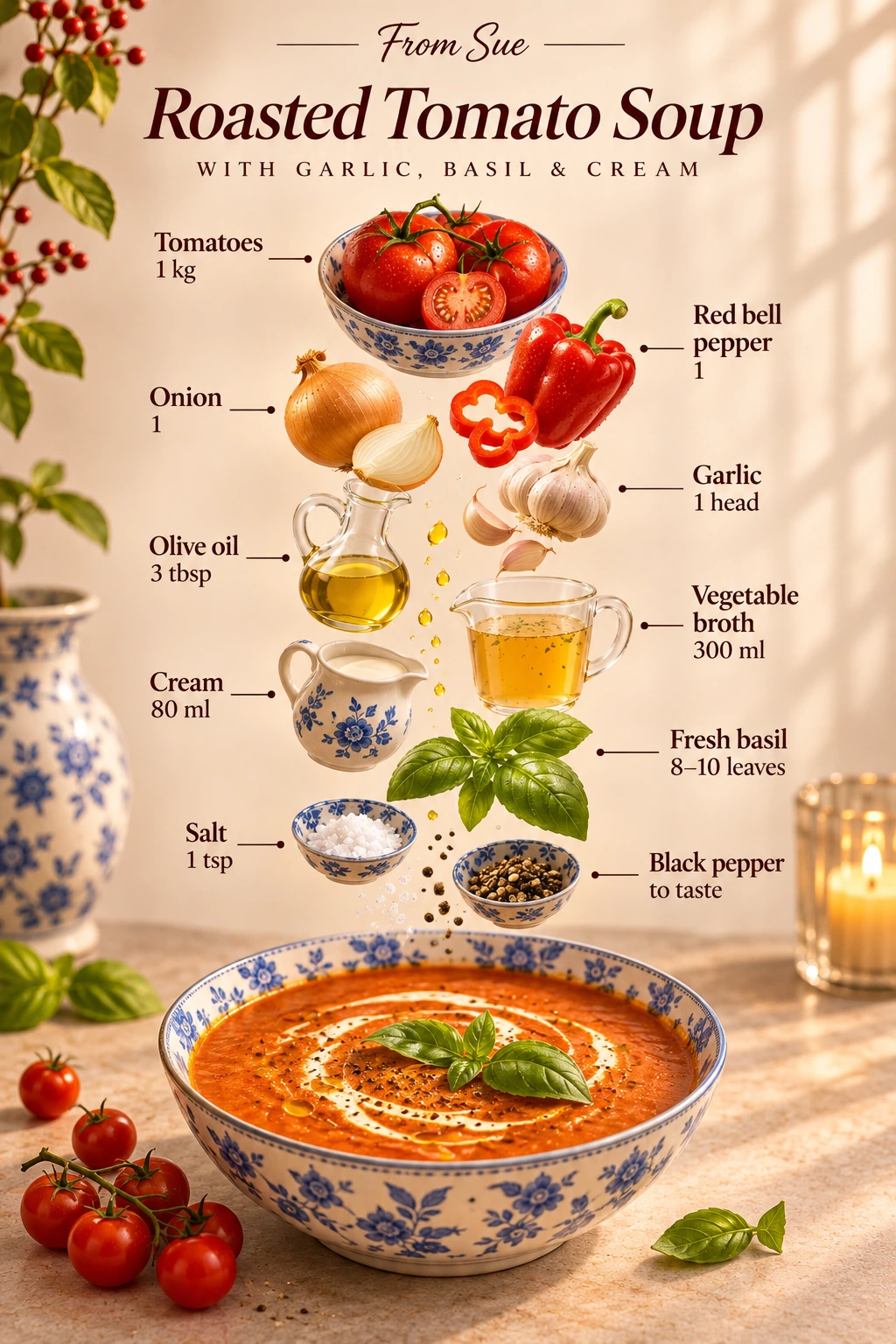
The visual board and instructions describe the original recipe for 4 servings. Use the adjusted checklist amounts when changing servings.
From the kitchen
Instructions
Heat the oven to 425°F (220°C), or 400°F (200°C) fan. Set out a large rimmed roasting tray; use two trays if the vegetables would overlap heavily. Wash the tomatoes and pepper, then dry them. Remove the tomato cores and cut larger tomatoes into quarters, leaving smaller ones halved. Cut the pepper into broad pieces and discard its stalk, seeds and pale inner ribs.
Peel the onion and cut it into thick wedges, keeping enough of the root end to hold the layers loosely together. Remove only the loose, papery outer layers from the garlic head. Slice a thin piece off the top to expose the cloves while keeping the head intact. Place the tomatoes, pepper and onion on the tray. Put the garlic on a small square of foil alongside them.
Measure the full 3 tablespoons of olive oil. Drizzle a little over the exposed garlic, then use the rest to coat the vegetables. Add about half the listed teaspoon of salt and a little black pepper. Toss the vegetables and spread them out, with tomato cut sides facing up where possible. Close the foil loosely around the garlic so it can soften without the exposed tops burning.
Roast for 35–40 minutes, turning the pepper and onion once halfway through. The tomatoes should slump, the pepper should be soft, and some edges should be browned. Check the garlic with a small knife: the cloves should feel soft enough to squeeze. If it needs longer, leave its foil parcel in the oven for a few minutes while the other vegetables cool slightly. Keep the tray juices; they belong in the soup.
Transfer the roasted vegetables and every spoonful of their juices to a deep saucepan. Open the garlic parcel carefully, allowing steam to escape away from your hands. Once cool enough to handle, squeeze the softened cloves out of their skins into the pan. Discard the skins. Add the 300 ml vegetable broth and bring to a gentle simmer for about 5 minutes, stirring to loosen the roasted pieces.
Take the pan off the heat. Add the basil, keeping a few leaves for serving if you like, and blend until smooth with an immersion blender. Keep the blade submerged to prevent splashes. If using a jug blender, allow the soup to cool enough for the appliance and follow its instructions for hot liquids; work in small batches and never seal steaming soup in a closed blender cup.
Stir in the 80 ml cream. You can reserve a small spoonful from that measured amount to swirl into the bowls. Return the soup to low heat and stir just until hot, without a vigorous boil. Taste before adding the remaining salt, because vegetable broth varies in saltiness. Add black pepper to taste. Divide between four bowls and finish with the reserved cream and basil. Serve bread separately if desired.
GOOD TO KNOW
Kitchen Notes
- Choose ripe tomatoes with a strong tomato aroma. A mix of larger tomatoes and small vine tomatoes works well; keep the total trimmed weight at 1 kg. Very watery tomatoes may need a few extra minutes in the oven. Browning at the edges is useful, but blackened patches can make the finished soup bitter, so check the tray near the end of roasting.
- A crowded tray traps steam. If the vegetables sit in a deep layer, divide them between two trays and switch their oven positions halfway through. Keep the garlic wrapped while it roasts, and test that the cloves are tender before squeezing them into the soup. A smaller garlic head will taste milder than a very large one.
- The listed cream is heavy cream for this version. Reserve the garnish from the measured 80 ml rather than adding a second pour if you want to stay close to the displayed nutrition. The calculation counts all 3 tablespoons of oil and excludes bread, extra oil and extra cream. Add a little water only if you prefer a thinner soup after blending.
Storage & reheating
Storage: Refrigerate leftover soup in shallow covered containers within 2 hours and use within 3–4 days. For longer storage, freeze in individual portions for up to 2 months, leaving room for expansion. The cream may separate slightly after thawing; stir or blend briefly after reheating. Keep bread and fresh serving garnishes separate.
Reheating: Reheat the portion you need in a saucepan, stirring frequently, until steaming throughout and reaching 165°F (74°C). Lower the heat once hot so the base does not catch. Thaw frozen portions in the refrigerator before reheating. A small splash of water can loosen soup that thickens during storage.
FROM SUE · PRINTABLE RECIPE
Roasted Tomato Soup
Roasting tomatoes with red pepper, onion and a whole head of garlic gives this soup a mellow sweetness and a deeper flavor than a quick stovetop simmer. Blend the vegetables with their roasting juices, then add vegetable broth, cream and fresh basil. The recipe makes four servings. Use ripe tomatoes and give them room on the tray so their cut edges brown while the centers soften. Keep all the listed olive oil and cream within the measured amounts; bread and extra drizzles are optional accompaniments.
Prep: 10 minutes · Cook: 45 minutes · Total: 55 minutes · Serves: 4
Ingredients
- 1,000 g Tomatoes
- 1 pepper Red bell pepper
- 1 onion Onion
- 1 head Garlic
- 3 tbsp Olive oil
- 300 ml Vegetable broth
- 80 ml Heavy cream
- 8–10 leaves Fresh basil
- 1 tsp Salt
- to taste Black pepper
Instructions
- Heat the oven to 425°F (220°C), or 400°F (200°C) fan. Set out a large rimmed roasting tray; use two trays if the vegetables would overlap heavily. Wash the tomatoes and pepper, then dry them. Remove the tomato cores and cut larger tomatoes into quarters, leaving smaller ones halved. Cut the pepper into broad pieces and discard its stalk, seeds and pale inner ribs.
- Peel the onion and cut it into thick wedges, keeping enough of the root end to hold the layers loosely together. Remove only the loose, papery outer layers from the garlic head. Slice a thin piece off the top to expose the cloves while keeping the head intact. Place the tomatoes, pepper and onion on the tray. Put the garlic on a small square of foil alongside them.
- Measure the full 3 tablespoons of olive oil. Drizzle a little over the exposed garlic, then use the rest to coat the vegetables. Add about half the listed teaspoon of salt and a little black pepper. Toss the vegetables and spread them out, with tomato cut sides facing up where possible. Close the foil loosely around the garlic so it can soften without the exposed tops burning.
- Roast for 35–40 minutes, turning the pepper and onion once halfway through. The tomatoes should slump, the pepper should be soft, and some edges should be browned. Check the garlic with a small knife: the cloves should feel soft enough to squeeze. If it needs longer, leave its foil parcel in the oven for a few minutes while the other vegetables cool slightly. Keep the tray juices; they belong in the soup.
- Transfer the roasted vegetables and every spoonful of their juices to a deep saucepan. Open the garlic parcel carefully, allowing steam to escape away from your hands. Once cool enough to handle, squeeze the softened cloves out of their skins into the pan. Discard the skins. Add the 300 ml vegetable broth and bring to a gentle simmer for about 5 minutes, stirring to loosen the roasted pieces.
- Take the pan off the heat. Add the basil, keeping a few leaves for serving if you like, and blend until smooth with an immersion blender. Keep the blade submerged to prevent splashes. If using a jug blender, allow the soup to cool enough for the appliance and follow its instructions for hot liquids; work in small batches and never seal steaming soup in a closed blender cup.
- Stir in the 80 ml cream. You can reserve a small spoonful from that measured amount to swirl into the bowls. Return the soup to low heat and stir just until hot, without a vigorous boil. Taste before adding the remaining salt, because vegetable broth varies in saltiness. Add black pepper to taste. Divide between four bowls and finish with the reserved cream and basil. Serve bread separately if desired.
Kitchen notes
- Choose ripe tomatoes with a strong tomato aroma. A mix of larger tomatoes and small vine tomatoes works well; keep the total trimmed weight at 1 kg. Very watery tomatoes may need a few extra minutes in the oven. Browning at the edges is useful, but blackened patches can make the finished soup bitter, so check the tray near the end of roasting.
- A crowded tray traps steam. If the vegetables sit in a deep layer, divide them between two trays and switch their oven positions halfway through. Keep the garlic wrapped while it roasts, and test that the cloves are tender before squeezing them into the soup. A smaller garlic head will taste milder than a very large one.
- The listed cream is heavy cream for this version. Reserve the garnish from the measured 80 ml rather than adding a second pour if you want to stay close to the displayed nutrition. The calculation counts all 3 tablespoons of oil and excludes bread, extra oil and extra cream. Add a little water only if you prefer a thinner soup after blending.